Modern Wooden Pergola Sanctuary
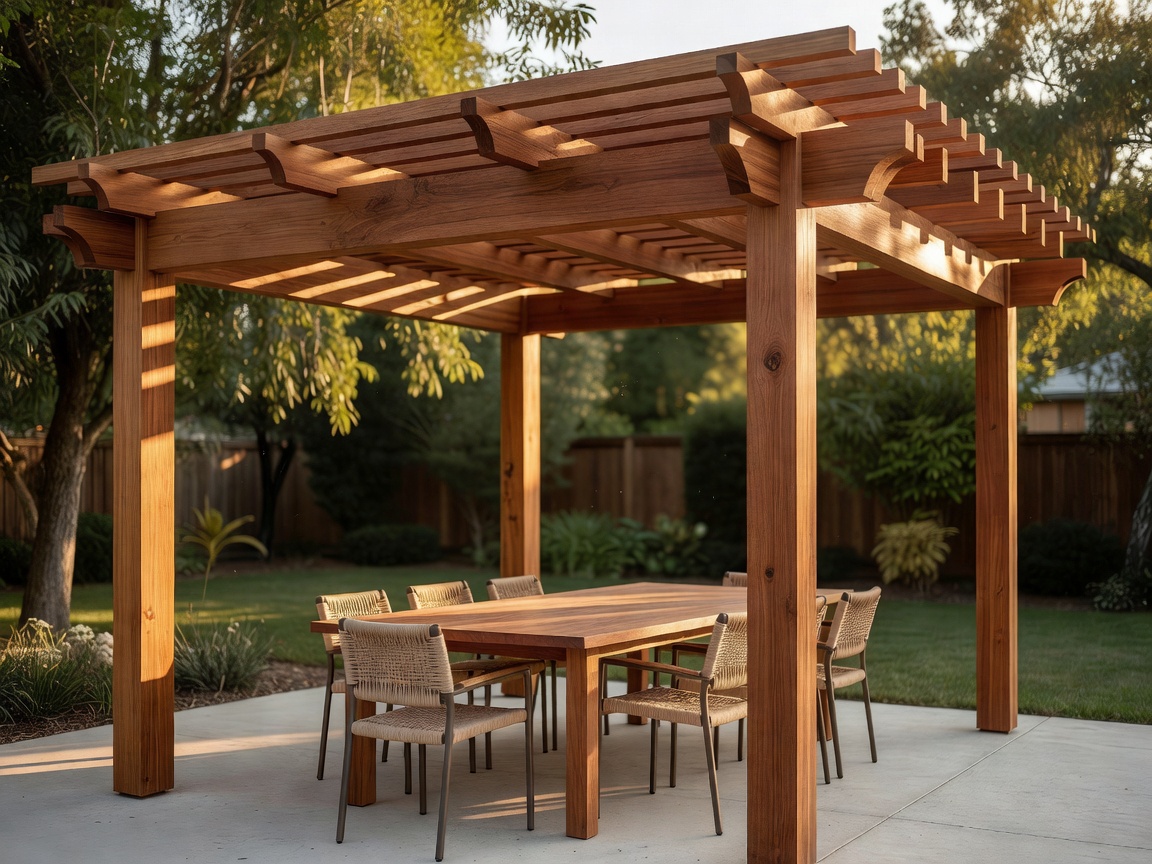
A flat, open patio can feel exposed and uninviting during the heat of the day. A pergola solves this by introducing verticality, defining an "outdoor room," and providing dappled shade. It is arguably the most impactful architectural upgrade you can make to a backyard.
1. Wood Selection: The Backbone of Your Build
The material you choose dictates the longevity, maintenance, and aesthetics of your pergola. You must use wood that can withstand the elements.
- Western Red Cedar: The gold standard. It contains natural oils that resist rot and insects. It is lightweight, dimensionally stable (won't warp easily), and has a gorgeous warm hue. (Most expensive).
- Pressure-Treated Pine: The budget-friendly option. It is chemically treated to resist rot, but it is prone to shrinking, warping, and checking (cracking) as it dries. It must be stained or painted.
- Redwood: Similar to Cedar but generally only cost-effective on the West Coast of the US. Highly durable.
2. Structural Foundations
If you are building over a patio, the 6x6 support posts must be secured to poured concrete footings. In colder climates, these footings must extend below the frost line (often 36 to 48 inches deep) to prevent the structure from heaving during winter.
3. Designing for Shade
A traditional pergola with open rafters provides only about 30-40% shade depending on the sun's angle. To increase shade coverage, consider these upgrades:
- Louvered Slats: Angling the top slats at 45 degrees blocks the harsh afternoon sun while allowing hot air to escape upward.
- Retractable Canopies: Fabric shades that run on wire tracks between the rafters, allowing you to completely block the sun or open it up for stargazing.
- Climbing Vines: Planting Wisteria, Climbing Roses, or Grapevines at the base of the posts. Over a few years, they will form a natural, lush, living canopy.
4. Permitting
Because a pergola is a permanent, freestanding structure that often exceeds 100 square feet, most municipalities require a building permit. You will likely need to submit a basic site plan showing the setback distances from your property lines.
View Structural Guide at This Old House →